Introduction
Cathie Wood’s ARK Invest recently trimmed its Tesla (TSLA) holdings, selling about 27,100 shares (roughly $11 million worth) from the ARK Innovation ETF ([1]). Despite this sale, Tesla remains ARK’s single largest position, and the stock even rose ~1.7% on the day of the transaction ([1]). The move comes on the heels of a sharp rally in Tesla’s stock — the company’s market capitalization surged by about $90 billion amid excitement over its AI and autonomous driving initiatives ([2]). However, analysts have noted mixed signals in Tesla’s recent quarterly results, raising questions about the strength of its core automotive business ([2]). In this context, investors are keenly focused on Tesla’s fundamentals and what lies ahead for the high-flying EV maker.
This report examines Tesla’s dividend policy, financial leverage, valuation, and key risks to paint a clearer picture of the company’s outlook. With ARK’s high-profile trim as a backdrop, we explore what’s next for TSLA in terms of financial health and strategic positioning.
Dividend Policy and Shareholder Returns
No Dividend History: Tesla has never paid a cash dividend on its common stock, and it currently offers a 0% dividend yield. This stance is unsurprising for a growth-oriented tech automaker – Tesla has consistently reinvested earnings into expanding production capacity, new models, and innovation rather than paying dividends. Over the past decade, Tesla funneled cash into launching vehicles across multiple segments (from the Model S in 2012 to the recent Cybertruck in 2023) and building out Gigafactory production worldwide ([3]). Management and the board have prioritized funding gigafactories (such as in Texas and Berlin), battery development, and other growth projects over returning cash to shareholders.
Share Buybacks: Unlike some mature companies, Tesla has also held off on share repurchases so far. Elon Musk has floated the idea of potential buybacks (at times hinting at a possible program in the $5–$10 billion range), but as of the latest filings no formal buyback had been executed. With Tesla sitting on a substantial cash war chest (see Financial Position below) and generating free cash flow, the question of capital returns lingers. For now, Tesla’s de facto policy is to retain and reinvest all earnings for growth, aligning with Musk’s long-term vision rather than providing near-term yield. This approach reflects confidence that reinvesting in innovation (e.g. autonomous driving capabilities, new factories) will create more shareholder value over time than dividends would ([4]). Investors seeking income must look elsewhere, as Tesla’s story is centered on growth, not cash distributions.
Leverage, Debt, and Coverage
Modest Debt Load: Tesla’s balance sheet is unusually strong for an automaker – the company carries low debt relative to its cash reserves. As of the most recent quarter, Tesla reported tens of billions of dollars in cash and marketable securities versus only a few billion in total debt, leaving it in a net cash position. In fact, Tesla has been paying down debt and ended last year with minimal financial debt outstanding (much of it consisting of low-interest loans for its energy and vehicle financing programs). This conservative leverage profile stands in contrast to legacy auto manufacturers that often carry heavy debt; Tesla’s booming equity raises and retained earnings over the past few years have allowed it to fund growth with equity and internally generated cash rather than large borrowings.
No Near-Term Maturity Crunch: The debt that Tesla does have is well-structured with no large maturities in the near term. Many of Tesla’s past convertible bonds have already converted or been repaid as the stock price soared. Remaining debt largely includes standard corporate borrowings and localized project financing (for example, factory construction loans in China) that are comfortably serviced. The absence of big looming debt maturities or onerous covenants reduces financial risk – Tesla is not pressured by refinancing needs or interest rate shocks in the short run. Credit rating agencies have taken note: Tesla was upgraded to investment-grade in 2023, reflecting its improved credit profile and strong balance sheet buffers.
The Eternal Energy Golf Ball — Power for 4 Billion Years
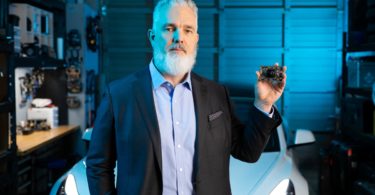
A tiny, golf-ball-sized quantum of energy that could replace oil, coal, lithium and millions of panels. Sounds wild? Meet the company making it real.
- Energy = 4,350 gal of oil or 3 million solar panels
- Potentially 4 billion years of power — at cents per kWh
- Backed by tech billionaires and a Silicon Valley breakthrough
Interest Coverage: With high operating profits and scant debt, Tesla’s interest coverage is very robust. The company’s earnings before interest and taxes (EBIT) are large relative to its small interest expense, meaning Tesla can easily cover its debt payments many times over. In recent quarters, Tesla’s interest expense has been so low that it is often offset by interest income on its cash (thanks to rising interest rates on deposits). Effectively, Tesla incurs little net interest cost. This financial strength gives Tesla flexibility – it can take on strategic debt (if needed for expansion) without straining its finances. Overall, Tesla’s leverage and coverage ratios indicate a fortress-like balance sheet for now, providing a cushion to withstand economic or industry downturns.
Valuation Overview
Premium Multiples: Tesla’s stock continues to trade at lofty valuation multiples relative to traditional automakers. Even after the past year’s volatility, Tesla commands a price-to-earnings ratio that is many times higher than legacy car companies – often tens of times earnings, whereas competitors like Toyota or Ford trade at single-digit P/E multiples. This stark valuation gap reflects investors pricing in vigorous future growth for Tesla. On a price-to-sales basis, TSLA also far outstrips peers, and its market capitalization (recently around the $0.7–1 trillion mark) has at times exceeded that of several major auto rivals combined ([3]). Tesla has been the world’s most valuable automaker since 2020 ([3]), and in late 2024 it re-entered the exclusive club of $1 trillion market-cap companies ([3]) – an almost unprecedented feat for a manufacturing company.
Growth Expectations vs. Reality: Such a valuation implies investors anticipate long-term growth and earnings expansion on a massive scale. Bulls point to Tesla’s technology lead in EVs, software, and potential new business lines (like autonomous ride-hailing) to justify these multiples. ARK Invest, for example, models a best-case scenario where Tesla shares could reach $2,600 by 2029, largely driven by robotaxi network revenues that they believe could account for 90% of Tesla’s future value ([4]). Bears, on the other hand, warn that Tesla’s current stock price embeds perfection – any slowdown in growth or margin compression could sharply correct the valuation. This debate is ongoing ([5]). In short, Tesla’s valuation prices in substantial success ahead; the company will need to deliver exceptional results for years (in unit sales, technology, and profitability) to grow into its market value. Any indication that Tesla’s growth is normalizing closer to the industry could put its premium valuation at risk.

Comparison to Peers: By most metrics, Tesla is an outlier in valuation. For instance, its enterprise value to EBITDA multiple is a multiple of that of established automakers, and its market cap per vehicle sold vastly exceeds the industry norm. While Tesla enjoys higher margins and growth rates than most car companies, the discrepancy in valuation also reflects its perception as a tech disruptor rather than a mere automaker. Investors essentially value Tesla more like a high-growth technology company (or multiple companies spanning autos, energy storage, software, and AI) than as a capital-intensive car manufacturer. This dual identity – part car company, part Silicon Valley tech – underpins the rich valuation, but also underscores the risk of multiple compression if Tesla’s growth falters or if rising interest rates lead investors to demand more reasonable prices for growth stocks.
Risks and Red Flags
Despite its strengths, Tesla faces several risks and potential red flags that investors should monitor:
– Intensifying Competition: Tesla’s dominance in the EV market is being challenged as virtually every global automaker (and many new startups) invest heavily in electric vehicles. Tesla held about 17.6% of the battery-electric vehicle market in 2024 ([3]), making it the single leader, but that means over 80% of EV sales are coming from others – a share that is growing. Companies like BYD in China, Volkswagen in Europe, and Ford/GM in the U.S. are launching dozens of new EV models. This competitive onslaught could pressure Tesla’s growth, market share, and pricing power over time. Tesla’s ability to keep its lead in technology and scale is not guaranteed as the playing field gets crowded.
– Reliance on Elon Musk and Management Turnover: Tesla’s brand and strategy are closely tied to its CEO, Elon Musk. His high public profile and involvement in ventures like SpaceX and X (Twitter) raise concern that he may be distracted from Tesla’s day-to-day operations. Indeed, insider reports in late 2024 suggested some senior staff felt Musk had “lost focus” on Tesla ([5]). The company has also seen significant executive turnover in recent years ([5]) – including the surprise resignation of Tesla’s long-serving CFO in 2023 – which could signal internal challenges. Losing key talent or a less engaged Musk could hamper Tesla’s execution. Musk’s mercurial personality and controversial public statements add an element of volatility and reputational risk for the stock.
– Regulatory and Legal Risks (Autopilot): Tesla is a pioneer in self-driving technology with its Autopilot and Full Self-Driving (FSD) features, but these have drawn regulatory scrutiny. The company currently faces multiple active investigations – both civil and criminal – into claims about its self-driving capabilities ([5]). High-profile accidents allegedly involving Autopilot have prompted NHTSA and the DOJ to probe whether Tesla’s marketing of “Full Self-Driving” is deceptive or unsafe. Any adverse findings could result in recalls, fines, or stricter regulation, which would be a setback for Tesla’s autonomous driving ambitions. More broadly, the evolving regulatory environment for EVs (emissions rules, safety standards, subsidies) can significantly impact Tesla.
– Product Quality and Safety Issues: While Tesla has a strong customer following, it has not been immune to quality-control problems. There have been frequent reports of manufacturing defects (paint, panel gaps) and more serious issues like sudden unintended acceleration and brake failures in Tesla vehicles ([5]). Tesla’s approach to recalls has been criticized – the company often fixes issues via software updates or “servicing” without formal recalls, which some see as skirting standard practices ([5]). These quality concerns and Tesla’s sometimes opaque handling of them (e.g. asking customers to sign NDAs after repairs ([5])) pose a reputational risk. In the long run, customer trust and Tesla’s premium brand could be eroded if serious quality or safety problems persist.
– Profit Margin Pressure: Tesla’s growth-at-all-costs strategy has recently led to margin compression. In order to spur demand, Tesla instituted multiple price cuts on its vehicles in 2023, which significantly dented its automotive gross margin. While lower prices boosted sales volume, they raised concern that Tesla might be sacrificing profitability to fend off competitors. With battery costs still impactful and new factories to ramp, Tesla’s industry-leading margins could come under further pressure, particularly if an EV price war intensifies. Keeping a balance between volume growth and healthy margins remains a key challenge – any sign of eroding profitability is a red flag for a stock valued on future earnings.
– High Valuation and Volatility: Tesla’s stock valuation, as discussed, is priced for perfection. This makes the stock sensitive to any hiccups in execution or outlook. If Tesla falls short of the aggressive growth and innovation targets baked into its share price, the stock could correct sharply. Even external factors like interest rate changes or market rotations out of growth stocks could disproportionately hurt TSLA’s valuation. The company’s own history shows considerable volatility – Tesla’s share price has swung dramatically multiple times in response to news or market sentiment. Investors in Tesla must accept above-average volatility and valuation risk given how much optimism is already factored into the price ([5]).
Outlook and Open Questions
Cathie Wood’s recent sale highlights the question on many investors’ minds: What’s next for Tesla? The company sits at a pivotal juncture, with huge opportunities ahead but also significant uncertainties. Here are some of the key open questions and factors that will determine Tesla’s trajectory:
– Can Tesla Deliver on Autonomy and Robotaxis? A centerpiece of the ultra-bull case for Tesla (championed by ARK Invest and others) is the potential for a fully autonomous “robotaxi” network. Wood remains long-term bullish, tying Tesla’s future value heavily to autonomous ride-hailing services rather than just car sales ([4]). Tesla itself has teased progress in FSD software, and Elon Musk has set ambitious timelines (e.g. deploying a robotaxi fleet in Austin with no safety drivers by 2025) ([4]). Achieving this could unlock new revenue streams and justify Tesla’s tech-company valuation. However, autonomy is a make-or-break frontier: it faces regulatory hurdles and technical challenges that are still unresolved. Regulators will have to approve true driverless operations, and competitors (Waymo, Cruise, etc.) are also racing ahead. The next 1–2 years will be telling – if Tesla can meaningfully launch robotaxi services, it could reinforce its growth narrative, whereas delays or failures on this front would cast doubt on a key pillar of its valuation.
– Will Growth Continue at the Same Pace? Tesla has rapidly scaled to ~1.7 million vehicle deliveries in 2024, but maintaining high growth rates gets harder as the base expands. Demand so far has been strong, yet questions persist about market saturation and competition. Tesla currently offers a limited lineup (mostly in the luxury-to-mass premium segments), and some competitors are targeting niches Tesla hasn’t addressed (like lower-cost EVs and various vehicle styles). The launch of the Cybertruck in late 2023 opens a new pickup segment for Tesla, but its reception and production ramp remain to be seen. Likewise, Tesla has hinted at a future affordable model (a “$25k car”), which could unlock a huge market if executed well – yet details and timing are unconfirmed. How quickly Tesla introduces new models and penetrates new segments will be crucial for sustaining growth. Additionally, macroeconomic factors (interest rates, consumer spending) will influence EV demand – Musk has noted that higher interest rates effectively make cars more expensive for buyers, which could dampen demand. Investors will be watching Tesla’s delivery numbers and backlogs closely for any signs of slowing momentum or the need for further price cuts.
– Can Tesla Restore and Maintain Margins? Another open question is whether Tesla can balance growth with profitability. The recent “price wars” in EVs, initiated in part by Tesla’s own price cuts, have pressured margins and alarmed some analysts ([2]). Going forward, Tesla’s goal will be to increase operating efficiency (through manufacturing innovations like the 4680 battery, gigacasting, etc.) to bring costs down – this would allow competitive pricing without sacrificing margins. The ramp-up of new factories (and localization of production) should eventually yield scale economies. However, new launches (like Cybertruck) and factory build-outs can initially weigh on margins. The key question is whether Tesla’s cost reductions and software revenue (e.g. FSD subscriptions) can offset any gross margin erosion from lower vehicle pricing. Tesla’s quarterly earnings calls and financial reports will be scrutinized for margin trends. If margins stabilize or rebound even amid competitive pricing, it will affirm Tesla’s business model strength. If not, Tesla might be forced to choose between pursuing volume (at the expense of profitability) or ceding some growth to maintain earnings – a tough strategic dilemma for such a highly valued company.
– How Will Tesla Deploy its Cash (and Will Shareholders See It)? Tesla’s balance sheet strength gives it a lot of strategic options. The company’s cash pile (over $20 billion) provides a cushion and could fund everything from R&D in AI to new gigafactories. One open question is whether Tesla will return some of this cash to shareholders eventually. So far, Elon Musk has dismissed dividends and buybacks in favor of using cash for growth opportunities. But as Tesla matures and if cash continues to accumulate, pressure could build from some investors to initiate a stock buyback or even a modest dividend. In 2023, Tesla’s board discussed the possibility of share repurchases, indicating the idea is on the radar. How Tesla balances capital allocation between aggressive expansion and potential shareholder returns will be an important storyline in coming years. Any hint of a buyback or dividend policy shift could signal Tesla’s transition from a pure growth play to a more value-oriented approach – a significant evolution in its corporate life cycle.
Conclusion: Tesla remains a company with tremendous promise and equally sizable challenges. The recent stake reduction by Cathie Wood’s ARK Invest can be seen as a routine portfolio rebalance (given Tesla’s strong run-up) rather than a loss of faith – in fact, Tesla still reigns as ARK’s top holding and Wood continues to predict far higher long-term prices ([1]) ([4]). Nonetheless, the trim spotlights the reality that even Tesla’s most ardent supporters are keeping an eye on short-term risks and fundamentals. Going forward, Tesla’s share price will likely be driven by its execution on key initiatives (scaling production, avoiding major quality/regulatory setbacks, and realizing self-driving tech) and its ability to navigate the competitive landscape. Any clear progress toward the coveted robotaxi future or other new revenue streams (such as energy storage projects or licensing software) could propel the stock to new heights. Conversely, if growth were to sputter or margins erode without clear signs of the “next big thing,” Tesla’s valuation could see a significant reset.
In summary, Tesla enters its next chapter with a mixture of confidence and uncertainty. The company has defied skeptics many times before, and its financial base is stronger than ever. Yet, with a rich valuation and many moving parts to its story, Tesla must continuously earn its market cap through innovation and execution. Investors should stay tuned to how these open questions are answered in the coming quarters – the resolution will determine what’s next for TSLA and whether the stock’s legendary run can continue or needs to hit the brakes. ([5]) ([2])
Sources
- https://sg.finance.yahoo.com/news/cathie-wood-dumps-millions-tesla-114524160.html
- https://benzinga.com/markets/equities/25/11/49100412/cathie-wood-dumps-11-6-million-worth-of-tesla-stock-here-is-what-ark-purchased-instead/
- https://en.wikipedia.org/wiki/Tesla%2C_Inc.
- https://tipranks.com/news/cathie-wood-dumps-more-tesla-stock-but-tsla-still-reigns-inside-ark
- https://en.wikipedia.org/wiki/Criticism_of_Tesla%2C_Inc.
For informational purposes only; not investment advice.