Introduction
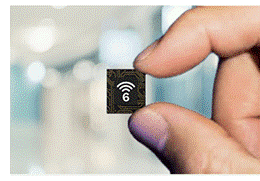
Citi analysts have turned positive on KLA Corporation (NASDAQ: KLAC), recently naming the company as their top pick among semiconductor equipment stocks (www.siliconinvestor.com). This bullish stance comes as the industry enters a new upcycle: global sales of chipmaking equipment are forecast to jump ~13.7% to $133 billion in 2025 and keep climbing to $156 billion by 2027 (www.tomshardware.com). Wafer fab equipment (WFE) – the front-end tools for chip production – is expected to lead this growth, rising about 11% in 2025 alone (www.tomshardware.com). Citi’s optimism is rooted in the view that surging demand from AI and high-performance computing is driving capital spending on advanced chip fabs, directly benefiting key suppliers like KLA (www.siliconinvestor.com).
Start collecting royalty checks before the first national payout.
Step 1
Learn the exact royalty play paying monthly checks
Step 2
Start with as little as $50 — get paid next month
Step 3
Position yourself before Wall Street moves in
KLA is a critical player in this upcycle, commanding a majority share of the process control segment of WFE (www.gurufocus.com). The company’s inspection and metrology tools are essential for top chipmakers such as TSMC and Samsung (www.gurufocus.com), giving KLA a strategic position as fabs race to ramp leading-edge technologies (e.g. 2nm nodes and EUV lithography). KLA’s exposure to these cutting-edge fab investments is projected to grow at a mid-to-high teens pace in 2025 (www.siliconinvestor.com). In short, KLA stands to ride the wafer fab equipment upsurge, and Citi’s bullish call highlights confidence in the company’s strong fundamentals amid these industry tailwinds.
Dividend Policy & Shareholder Returns
KLA has a shareholder-friendly capital return policy underpinned by robust cash generation. The company has increased its dividend for 16 consecutive years, most recently raising the quarterly payout to $1.90 per share in FY2025 (ir.kla.com). This represented a 12% bump from the prior $1.70 level and continues a trend of double-digit annual hikes. In the fiscal year ended June 2025, KLA paid out $904.6 million in dividends and still repurchased $2.15 billion of its stock, reflecting confidence in its free cash flow (ir.kla.com). Despite these generous raises, the dividend yield remains modest (on the order of ~1%–2%), as KLA’s share price has climbed alongside its earnings. For example, when KLA increased its quarterly dividend to $1.45 a few years ago, the forward yield was about 1.2% (seekingalpha.com) – a level similar to today, given subsequent payout boosts and stock appreciation. The relatively low yield signals that investors value KLA more for growth than income, yet the payout is very well-covered. In FY2025, dividends consumed only ~22% of operating cash flow (roughly $0.9 billion out of $4.08 billion) (ir.kla.com) (ir.kla.com). This conservative payout ratio and strong cash generation (aided by KLA’s high margins) give management ample room to keep raising dividends and executing buybacks. KLA has explicitly stated it intends to continue quarterly dividends, subject to Board approval and overall capital needs (ir.kla.com) (ir.kla.com). Barring an unexpected downturn, investors can likely count on KLA’s dividend growth streak to continue, supported by healthy free cash flow and a commitment to returning excess cash to shareholders.
Leverage, Debt Maturities & Coverage
Balance sheet leverage at KLA is moderate and comfortably managed. The company carries about $5.95 billion of long-term debt (as of June 2025) consisting of senior unsecured notes with laddered maturities (ir.kla.com) (ir.kla.com). Notably, KLA faces no significant near-term maturities – it repaid a $750 million note due 2024 and the next bond maturity isn’t until 2029 (when $800 million comes due) (ir.kla.com). Thereafter, maturities are spread out into the 2030s and beyond, including $1.0 billion due 2032 and additional tranches in 2034, 2049, 2050, etc. (ir.kla.com). This long-dated debt profile reduces refinancing risk. KLA also bolstered its liquidity by securing a new $1.5 billion revolving credit facility in 2025 that extends to 2030 (ir.kla.com) (ir.kla.com). The revolver was undrawn as of the last report, giving KLA extra cushion if needed.
KLA’s leverage ratio is quite low for its industry. Under its debt covenants, the company’s gross debt-to-EBITDA was about 1.02× – well below the allowed 3.5× limit (ir.kla.com). In fact, with over $4.5 billion in cash and investments on hand (ir.kla.com), KLA’s net debt is under ~$1.5 billion, implying net leverage well under 1× EBITDA. Credit rating agencies recognize this strength: KLA holds solid investment-grade ratings (Moody’s A2 and S&P A-) (ir.kla.com), reflecting its manageable debt and stable cash flows.
Interest coverage is very robust. KLA’s annual interest expense was about $302 million in FY2025 (ir.kla.com), equivalent to only ~2% of revenue (ir.kla.com). By contrast, EBIT covered interest by roughly 15×, and EBITDA coverage is higher still. These metrics indicate the company can comfortably service its debt with room to spare. Even in a rising rate environment (KLA does have some floating-rate debt via the revolver), the impact is limited, as fixed-rate bonds compose the bulk of obligations (e.g. 4.1%–5.3% coupons on the notes) (ir.kla.com). KLA was in full compliance with all debt covenants last year and held a leverage ratio of just ~1.0× vs the max 3.5× allowed (ir.kla.com). Overall, KLA’s financial position is strong: ample liquidity, moderate debt levels pushed far into the future, and significant earnings coverage of interest. This gives KLA the flexibility to invest in R&D and strategic projects (or withstand industry downturns) without balance sheet strain. It also enables ongoing shareholder returns (dividends/buybacks) without compromising financial stability.
Valuation and Financial Performance
KLA’s valuation reflects its premier position in a booming niche, though it isn’t a bargain by traditional metrics. The stock currently trades around the mid-20s in terms of price-to-earnings. In mid-2025, for instance, KLA was valued at ~26× forward earnings (moneyweek.com) – not exactly cheap, but generally in line with top peers in semiconductor equipment. For comparison, lithography leader ASML was around 25× forward earnings at that time, while broader tech-industrial names like Nikon and Canon traded at lower multiples (sub-20× and ~11×, respectively) (moneyweek.com). KLA’s premium valuation is underpinned by its high profitability and dominant market share. The company boasts gross margins above 60% and recently achieved an operating margin near 42% (www.gurufocus.com) – exceptionally strong for a capital equipment manufacturer. Net margin was ~33% in FY2025 (>$4 billion net income on $12.16 billion revenue) (ir.kla.com). This profitability, combined with a generous ~14% revenue CAGR over the past three years (www.gurufocus.com), supports a higher earnings multiple. Investors are effectively paying for KLA’s track record of growth plus its entrenched position in the “process control” duopoly (KLA holds over 50% share in wafer inspection, with the rest divided among smaller rivals) (moneyweek.com).
In absolute terms, KLA’s stock performance has been impressive: its market capitalization has swelled to roughly $170+ billion by early 2026 (www.gurufocus.com) after significant price appreciation. The run-up corresponds with KLA’s earnings surge – for context, net income jumped from $2.76 billion in FY2024 to $4.06 billion in FY2025 as chipmakers ramped fab investments (ir.kla.com). Even if growth moderates, KLA is still trading at a PEG ratio (price/earnings-to-growth) that many investors view as reasonable given secular drivers like AI. On a free cash flow basis, the stock’s valuation also appears robust but fair: KLA converts a large portion of its earnings to cash, and its enterprise value to FCF is comparable to other high-quality tech industrials. Another lens is relative valuation within semiconductors – KLA’s forward P/E in the mid-20s is below that of many chip designers (often 30×+), reflecting KLA’s slightly lower growth profile but also its lower risk (more diversified customer base and recurring service revenue). Overall, KLA trades at a healthy premium to the market, justified by its market leadership, stellar financials, and leverage to an upcycle in chip equipment. Any further upside likely hinges on outperformance of WFE spending forecasts (or KLA taking share), while downside risks (discussed below) could put pressure on the multiple if growth falters.
Key Risks and Red Flags
While the outlook is bright, KLA faces several risks and potential red flags that investors should monitor. First, the semiconductor equipment business is notoriously cyclical. Downturns in chip capital spending can significantly hit KLA’s sales, as seen in FY2024 when revenue dipped ~7% amid a memory-chip slump (ir.kla.com). The current upsurge is fueled by AI and government-supported fab expansions, but a macroeconomic slowdown or tech inventory glut could pause orders. KLA continues to invest in R&D even during down cycles to maintain its technology edge (ir.kla.com), which helps long-term competitiveness but could squeeze margins if revenues drop suddenly. A related risk is customer concentration: due to industry consolidation, a few big chip manufacturers account for a large portion of KLA’s business (ir.kla.com). If one major customer (e.g. TSMC, Samsung, Intel, SK Hynix) delays or cancels equipment orders, KLA’s quarterly results can be volatile. The flip side is that winning a big multi-year tools order from a leading-edge fab can disproportionately boost KLA – but that reliance on a handful of buyers introduces lumpiness and bargaining pressure on pricing.
Another critical risk involves geopolitics and export controls. China has become a huge end-market for semiconductor equipment, and KLA has benefited from that demand – China-based customers made up ~33% of KLA’s revenue in FY2025 (down from an even higher 43% in FY2024) (ir.kla.com). However, U.S. government export restrictions are increasingly limiting what advanced tools can be sold to Chinese fabs. In late 2022 and 2023, new U.S. rules added dozens of Chinese entities to trade blacklists and tightened licensing requirements for equipment used in cutting-edge logic and memory production (ir.kla.com) (ir.kla.com). These measures have already impacted KLA: the company noted that inability to obtain export licenses led to a reduced backlog and even forced it to refund some customer deposits in China (ir.kla.com). If export controls ratchet tighter (or Chinese clients cannot secure licenses), KLA could lose significant sales and be required to write off orders. Moreover, there’s a strategic red flag: export bans may accelerate the rise of Chinese competitors. KLA warns that restrictions on U.S. tools could “make it easier for China-based competitors to develop and sell their own products” and potentially steal market share in the long run (ir.kla.com). In effect, today’s political winds might inadvertently seed new rivals in KLA’s core inspection/metrology domain – a scenario to watch in the coming years.
Additional risks worth noting include execution and technology shifts. The competitive moat in process control is high, but not unassailable. While KLA leads, companies like Applied Materials and Onto Innovation compete in certain segments, and customers may experiment with in-house solutions or extended tool lifetimes to save costs. Should a disruptive new metrology technology emerge (for example, an AI-driven defect detection method or a novel imaging technique), KLA would need to respond or potentially see its edge erode. Another area to monitor is KLA’s expansion into adjacent markets like PCBs and advanced packaging (via its Orbotech acquisition). That division has faced headwinds – management even took an impairment charge related to the PCB/Display unit when its outlook weakened (ir.kla.com). If those non-core segments underperform or if integration issues arise, it could drag on overall results (though so far the impact is relatively minor). Lastly, regulatory and legal risks exist: KLA must comply with global trade regulations (with heavy penalties for violations (ir.kla.com)), and it, like others, could face intellectual property disputes or antitrust scrutiny in certain jurisdictions. While no major litigation is on the horizon, these factors are part of the risk landscape.
In summary, the biggest red flags for KLA are macro/cyclical swings and geopolitical constraints. A rapid rise in interest rates or a tech spending pullback could stall the WFE upcycle. And U.S.–China tensions pose a twofold threat: curbing one of KLA’s largest markets in the near term, and fostering new competition in the long term. KLA’s strong fundamentals give it resilience, but investors should remain aware that this is a cyclical, globally entwined business – not an all-weather steady compounder. Any sign of weakening chip demand or adverse policy moves could introduce volatility to the KLA story, despite its current momentum.
Conclusion and Open Questions
KLA enters 2026 with substantial momentum: a bullish endorsement from Citi, an upswing in wafer fab spending, and financial metrics near all-time highs. The company’s blend of market dominance, dividend growth, and technological moat makes a compelling case in the semiconductor equipment space. Yet, some open questions remain as we look ahead:
– Sustainability of the Upcycle: How long can the AI-driven surge in chip equipment orders last? There are already hints of caution from industry leaders about overbuilding capacity. If the current boom leads to oversupply or if AI demand cools, WFE growth could revert to a down-cycle. KLA’s outlook is optimistic (they project growth even in areas like advanced packaging thanks to AI) (www.gurufocus.com), but forecasting the duration of upcycles is inherently tricky. Investors will be watching for signs of peaking order growth or tightening fab capital budgets in 2026–2027.
– China and Policy Wildcards: How will U.S.–China tech relations evolve, and can KLA navigate a world of bifurcated tech markets? If Chinese fabs are forced to rely on domestic tool suppliers, KLA might need to rely more on other regions (U.S., Europe, Taiwan, Korea, Japan) to backfill any lost business. Additionally, could China’s push for self-sufficiency produce a credible homegrown competitor in process control tools? KLA’s management has to continuously monitor and adjust to export rule changes – a significant open question is whether the company can maintain its China revenue (perhaps via licenses for legacy-node equipment) or if that will structurally decline over time (ir.kla.com).
– Future Growth Drivers: Beyond the current cycle, where will KLA’s next leg of growth come from? The company is investing in new technologies like tools for sub-2nm nodes, chip packaging inspection, and potentially emerging areas (e.g. silicon photonics or quantum computing fabrication). An open question is how well KLA can capitalize on these nascent opportunities to diversify its revenue. Additionally, might KLA pursue another acquisition to bolster its portfolio (as it did with Orbotech)? Thus far, organic R&D has driven innovation, but management could consider strategic M&A if a compelling target in the metrology/inspection space arises. Any such moves would raise questions about integration and capital allocation, given KLA’s emphasis on returning cash to shareholders.
– Capital Allocation and Shareholder Returns: Lastly, can KLA sustain its pace of dividend growth and buybacks if industry conditions change? The company’s current payout strategy is well-supported by earnings, but in a severe downturn, would KLA prioritize maintaining its dividend streak or preserving cash for R&D and potential opportunities? With a fortress balance sheet and a culture of returning cash, one expects dividends would continue even in lean times (perhaps with smaller raises). Still, the commitment to capital return will be an open question if capex spending undergoes a sharp contraction. Thus far, KLA has navigated cycles without cutting shareholder payouts (ir.kla.com) (ir.kla.com), but investors will monitor future Board decisions closely for any change in policy.
In conclusion, Citi’s bullish view on KLA appears well-founded given the confluence of an industry uptrend and KLA’s standout financial health. KLA is arguably in the sweet spot of the semiconductor value chain – supplying the “picks and shovels” to the AI and advanced computing gold rush. The company’s dominance in its niche and prudent financial management (high margins, moderate leverage, steady shareholder returns) provide a strong underpinning to the investment thesis. However, potential investors should weigh the risks of cyclicality and geopolitics, as well as the open questions above, when considering the stock. The wafer fab equipment upsurge has put wind at KLA’s back, and Citi’s optimism suggests confidence that this cycle still has room to run. How KLA capitalizes on the boom – and how it navigates the eventual challenges – will determine if the stock’s rich valuation is ultimately rewarded with further upside. For now, KLA remains a leader in a rising tide, and many on Wall Street (Citi included) are betting on its continued success amid the expanding demand for semiconductor infrastructure.
Sources: The analysis above is grounded in KLA’s SEC filings and investor reports, industry forecasts, and credible financial media. Key sources include KLA’s FY2025 Annual Report (10-K) for financial and operational details (ir.kla.com) (ir.kla.com) (ir.kla.com), industry data from SEMI on WFE growth (www.tomshardware.com), and commentary from Citi and others on KLA’s outlook (www.siliconinvestor.com). These references (denoted in brackets) provide the factual basis for the points discussed.
For informational purposes only; not investment advice.