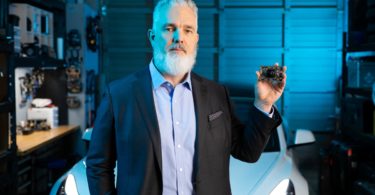
Tesla’s stock ticked up about 1% after bullish data on its China sales bolstered market sentiment. In fact, Tesla’s China division just notched record monthly deliveries in December – about 94,000 locally-made vehicles sold to Chinese customers, a new high and 13.4% above its previous record (www.scmp.com). Including exports from Shanghai, Tesla tallied over 97,000 units for the month, up 3.6% year-on-year (www.scmp.com). This surge was partly driven by buyers rushing to beat an expiring EV tax incentive (www.scmp.com) (www.scmp.com). China is a critical market for Tesla, contributing roughly $21.7 billion (about 22%) of Tesla’s $96.8 billion total revenues in 2023 (www.sec.gov). The upbeat China sales news highlights Tesla’s resilience in the world’s largest EV market – even as its market share there has slipped to just ~4% amid fierce competition from local rivals (www.scmp.com). Below, we dive into Tesla’s fundamentals – covering its capital allocation, balance sheet leverage, valuation, and key risks – to evaluate the investment case after this latest development.
Dividend Policy & History
Tesla does not pay any dividend and has never declared one since its 2010 IPO (www.sec.gov). Management reiterates that it “has never declared or paid cash dividends on our common stock” and does not anticipate doing so “in the foreseeable future” (www.sec.gov). Instead, Tesla opts to reinvest retained earnings into growth initiatives like expanding production capacity and developing new technologies. This contrasts with legacy automakers that often pay regular dividends – for example, Ford offers a ~5% yield – whereas Tesla’s dividend yield remains 0% (pocketoption.com). Traditional income metrics like Funds From Operations (FFO) or Adjusted FFO are not applicable in Tesla’s case, as those are used for asset-heavy income-generating businesses (e.g. REITs). Tesla’s focus is squarely on growth over income distribution (pocketoption.com). Investors seeking cash returns from Tesla must rely on potential stock price appreciation (or tactical trades like covered calls), since all cash flows are plowed back into the business rather than paid out as dividends. Tesla’s stance reflects its view that it has ample opportunities to deploy capital at high returns – a mindset typical of high-growth tech companies.
Dividend history: Since going public, Tesla has never returned cash to shareholders via dividends (www.sec.gov). Notably, Tesla executed stock splits in 2020 and 2022 (5-for-1 and 3-for-1 respectively), both structured as stock dividends, but these were essentially accounting moves to split shares (in August 2020 and August 2022) (www.sec.gov) – they did not involve cash payouts to investors. There is no indication this policy will change soon. CEO Elon Musk has repeatedly signaled that Tesla will prioritize growth investments (factories, R&D, product development) over initiating any dividend. Analysts largely agree a dividend is unlikely in the near term, given Tesla’s expansion plans and still-evolving competitive landscape (pocketoption.com). In summary, Tesla offers a 0% dividend yield and any investor return comes from stock performance, not income – a profile more akin to a tech growth stock than a mature auto manufacturer.
Why Symbiotic Could Crush Optimus — 3 Quick Reasons
Show me the Symbiotic dossier ▶
(function(){
try{
var fills=document.querySelectorAll(‘.fr-list .fill’);
fills.forEach(function(f,i){
var w=f.getAttribute(‘data-w’)||70; setTimeout(function(){f.style.width=w+’%’;},100+ i*120);
});
}catch(e){}
})();
Leverage & Debt Maturities
Tesla’s balance sheet is very strong, with relatively low debt and substantial liquidity. As of the most recent annual filing, Tesla had $4.68 billion in total debt outstanding (www.sec.gov). This is modest in the context of Tesla’s size (enterprise value well over $1 trillion) and is far outweighed by the company’s cash reserves. Tesla held about $16.4 billion in cash and equivalents plus $12.7 billion in short-term investments on its balance sheet at year-end 2023 (www.sec.gov). Even excluding those investments, cash alone is over 3× total debt – meaning Tesla sits on a net cash position (cash minus debt) of roughly $24 billion. This net cash provides a significant cushion and flexibility for the company to fund growth or weather downturns.
Debt composition: Notably, most of Tesla’s debt is not traditional corporate bonds but rather asset-backed and non-recourse financing tied to its vehicle leasing and solar businesses. For example, Tesla has issued automotive lease-backed notes and solar project debt that do not have claim on Tesla’s broader assets (www.sec.gov). Pure recourse debt (corporate borrowings) was only around $44 million as of 2023 – essentially negligible (www.sec.gov). Tesla also maintains a sizable undrawn credit facility: a $5.0 billion revolving credit line available through January 2028, which remained entirely unused as of the last report (www.sec.gov). This revolver provides additional liquidity if needed, though Tesla’s operating cash flow and cash stockpile have reduced any need to draw it.
Maturity profile: Tesla’s debt maturities are well-staggered and manageable. Only about $1.98 billion (of the $4.68 billion debt) comes due within the next 12 months (www.sec.gov). These near-term maturities likely include some vehicle lease-backed notes and a small $37 million tranche of legacy convertible notes due May 2024 (www.sec.gov). The remainder of debt matures over longer periods, extending out to 2031 in some cases (e.g. certain solar bonds and asset-backed notes) (www.sec.gov). With over $29 billion of liquid assets on hand (cash + investments) (www.sec.gov), Tesla could retire all its debt several times over. In fact, Tesla has been reducing leverage in recent years – it paid down billions in debt as cash flow improved, and in 2023 both S&P and Moody’s upgraded Tesla’s credit to investment grade (Baa3) (www.bloomberg.com). Reaching investment-grade status was a milestone, reflecting confidence in Tesla’s solid balance sheet and conservative financial leverage.
Overall, Tesla’s financial leverage is low by industry standards. Debt-to-equity and debt-to-EBITDA ratios are minimal, and interest obligations are a drop in the bucket relative to earnings (as discussed below). The modest debt that does exist is well term-structured, and ample liquidity plus positive free cash flow mean refinancing risks are virtually nil. This gives Tesla strategic flexibility – it can fund new factories or technology projects through internal resources or low-cost debt if advantageous, rather than being forced to issue equity. Moody’s noted Tesla’s “leadership in EVs” and improving finances when bestowing investment grade (www.bloomberg.com), underlining that Tesla’s credit profile is robust and trending positively.
Coverage & Liquidity
Tesla’s interest coverage is extremely strong, owing to its low debt and healthy profits. In 2023, Tesla’s total interest expense was only $156 million (www.sec.gov) – a trivial amount relative to its earnings. By comparison, Tesla’s income before taxes was nearly $10 billion in 2023 (www.sec.gov). This implies that earnings covered interest charges over 60× in the latest year. Even using EBITDA (which was higher), the coverage ratio would be further magnified. In short, Tesla can easily meet its interest obligations from operating income; debt service does not strain the company’s finances at all. Interest expense has actually declined in recent years as Tesla paid down higher-cost debt – for instance, interest expense fell from $371 million in 2021 to $156 million in 2023 (www.sec.gov). Meanwhile, operating profits have grown (though 2023 saw some margin pressure, Tesla still earned $15 billion in net income (www.sec.gov)). The result is a vast cushion for fixed charges. Tesla’s interest coverage ratio (EBIT/Interest) is among the highest of large-cap companies, reflecting effectively zero stress from debt costs.
Beyond interest coverage, Tesla’s overall liquidity position is very solid. As noted, it holds nearly $30 billion in cash and short-term investments (www.sec.gov), plus access to a $5 billion credit facility (www.sec.gov). Its current ratio is comfortably above 1 (with over $20 billion in working capital surplus). Operating cash flow remains strong – Tesla generated $13.3 billion of cash from operations in 2023 (www.sec.gov), easily funding its $7–10 billion annual capital expenditures. Moreover, Tesla’s profitability and cash generation are expected to improve if it scales new factories (Texas, Germany) and as economies of scale continue to lower per-unit costs. Free cash flow was positive each of the last few years, even after heavy growth capex. These trends indicate Tesla can self-fund its expansion without straining liquidity.
One commonly watched coverage metric for automakers is interest coverage and fixed-charge coverage (including lease obligations). Tesla’s fixed charges (interest + lease payments) are well covered by EBITDA. The company’s filings show $5.96 billion of future lease payment commitments, with $1.31 billion due in the next year (www.sec.gov) – again manageable given Tesla’s cash flow. It’s also worth noting Tesla’s minimal pension or legacy obligations (unlike older automakers), removing another potential drain on cash. All told, Tesla’s liquidity and coverage ratios indicate a very comfortable financial position, providing resilience against any short-term downturns or cost spikes. This financial strength gives Tesla a buffer to pursue aggressive pricing or investment strategies (as seen by recent vehicle price cuts) without jeopardizing its solvency.
Valuation and Comparables
Tesla’s valuation remains elevated relative to traditional financial metrics, reflecting high growth expectations. After the recent rally, Tesla’s market capitalization is about $1.6 trillion (simplywall.st). Against 2023 revenues of ~$97 billion (www.sec.gov) (www.sec.gov), this implies a Price/Sales ratio around 16× (simplywall.st). For context, major legacy automakers trade at <1× sales – for example, General Motors’ market cap is ~$72 billion, just ~0.4× its annual revenues (simplywall.st). Even other tech-heavy carmakers like Toyota or Volkswagen typically have P/S well under 1. Tesla’s rich multiple signals that investors are valuing it more like a high-growth technology company than a car manufacturer. On an earnings basis, Tesla’s Price/Earnings ratio is also very high. As of early 2026, Tesla’s trailing P/E was in the range of 300–400× earnings (www.macrotrends.net). Macrotrends data show a ~389× P/E in Feb 2026 (www.macrotrends.net), inflated in part because 2025’s earnings dipped (more on that in Risks). Even on a forward-looking basis (using consensus profit forecasts), Tesla’s forward P/E is ~190–200× (www.marketscreener.com), vastly above the market average. By comparison, Ford and GM trade at ~8–10× earnings, and even highly valued tech giants like Apple or Google are in the ~20–30× range.
It’s clear that Tesla’s stock carries a substantial premium. Investors are effectively paying for future growth and technological leadership rather than current profits. One analysis noted Tesla’s valuation multiples have been an outlier – at one point, Tesla’s market cap was 20× that of the largest legacy automakers, and its valuation ratios were “three times higher than those of Apple, Google or Meta.” This “anomaly” may not last forever (www.lemonde.fr) (www.lemonde.fr), the analysis warned, suggesting Tesla’s stock price embeds extremely optimistic assumptions. Bulls argue that Tesla deserves a unique valuation due to its rapid growth, category-defining technology, and future potential in energy and software. Indeed, Tesla’s revenue grew ~51% in 2021 and ~51% in 2022, and another 19% in 2023 to $96.8 billion (www.sec.gov) (www.sec.gov). Its net income soared to $12.6 billion in 2022 and $15.0 billion in 2023 (www.sec.gov), which is exceptional for an automaker. However, more recently Tesla’s growth has slowed and margins have come under pressure (Q3 2025 profit was down year-on-year) – raising the question of whether the valuation can be justified if momentum eases.
Comparables: In absolute terms, Tesla’s ~$1.6 trillion market cap exceeds the combined market cap of many competitors. It is valued far above Toyota (~$200B), Volkswagen (~$70B), and GM (~$70B). Tesla’s Enterprise Value/EBITDA multiple is similarly lofty, well into triple-digits, vs single-digit EV/EBITDA for legacy peers. Even newer EV entrants like Lucid or Rivian trade at fractions of Tesla’s valuation relative to their sales (albeit they have lower scale). The market is effectively capitalizing Tesla’s future software and self-driving revenues at high multiples – a bet that Tesla will not just sell cars, but also generate high-margin revenue from services like autonomous taxi networks, energy storage, and AI. If Tesla can realize that vision, high valuations may be vindicated; if not, there is significant downside risk. In sum, Tesla’s stock trades at a steep premium by conventional metrics (P/E, P/S), dwarfing auto-industry norms (simplywall.st). This reflects confidence in Tesla’s long-term growth but also exposes investors to valuation risk – minor execution issues or demand slowdowns can have outsized effects on the stock given the rich multiples.
Key Risks
Tesla faces a range of risks and challenges that investors should monitor:
– Intensifying Competition: The global auto market is “highly competitive” and Tesla’s EV leadership is being challenged by both established automakers and new entrants (www.sec.gov). Virtually every major carmaker (Ford, GM, VW, Toyota, etc.) is launching EV models, often at aggressive price points, and numerous startups (Rivian, Lucid, NIO, Xpeng) compete in various segments. In key markets like China and Europe, Tesla now faces dozens of rival EV offerings (www.sec.gov). Many competitors have far greater production capacity and entrenched brand loyalty in their home markets. Tesla acknowledges that increased competition could force price reductions, lower sales, or loss of market share, adversely affecting its finances (www.sec.gov). Indeed, we’ve seen evidence of this: in China, domestic EV maker BYD overtook Tesla as the world’s largest EV seller in 2025 (uk.finance.yahoo.com), and Tesla’s share in China fell to ~8% in 2024 from 10% prior (za.investing.com). Competition risk is high, and it could pressure Tesla’s growth, pricing power, and margins if Tesla cannot maintain a technology edge or brand cachet.
– Demand and Macroeconomic Risks: As a high-ticket consumer product, Tesla’s sales depend on economic conditions and consumer sentiment. The EV market’s growth, while robust, may slow – Bloomberg forecasts global EV sales growth will decelerate to ~12% in 2026 vs 23% in 2025 (moneyweek.com). Economic factors like rising interest rates (making auto loans/leases more expensive) and the cyclical nature of auto sales could dampen demand (www.sec.gov) (www.sec.gov). Tesla itself cautions that if the EV market or demand for Tesla vehicles develops more slowly than expected, or if interest in its cars wanes, its business could be harmed (www.sec.gov) (www.sec.gov). Region-specific issues pose risks too: for example, reduced EV subsidies in China and potential consumer fatigue have been cited as headwinds to EV demand growth (moneyweek.com) (moneyweek.com). Additionally, the price cuts that Tesla has implemented to stoke demand (especially in 2023–2024) raise concerns – they helped boost volumes but at the cost of margins (see below). If economic conditions worsen or if Tesla misjudges demand, it may face inventory build-ups or further margin erosion.
– Profitability & Margin Pressure: Tesla’s recent financial results show margin compression, highlighting a risk to its high-flying valuation. In Q3 2025, Tesla’s automotive gross margin was ~18%, down from ~26% a year earlier and well below the ~30% levels of 2021 (apnews.com). This decline is largely due to price cuts and sales incentives Tesla rolled out to stay competitive (apnews.com). While lower prices drove a 7% rebound in Q3 sales volumes (apnews.com), they also dented profit – Tesla’s Q3 2025 net income fell 37% year-on-year to $1.4 billion (apnews.com), marking the fourth consecutive quarter of profit declines. Cutthroat competition and cost inflation (materials, labor) could further pressure margins. Each additional wave of EV competition or battery cost spike might force Tesla to choose between sacrificing margin or sacrificing growth – a difficult trade-off. If Tesla cannot maintain healthy margins, its earnings will fall short of the optimistic forecasts embedded in its stock price. As CFRA analyst Garrett Nelson observed, “there’s a lot of uncertainty” around EV demand and pricing, and he maintains a Sell rating on TSLA partly due to these margin/demand concerns (apnews.com). Investors should monitor Tesla’s vehicle average selling prices (ASPs) and gross margin trends closely; continued deterioration could significantly undermine the bull case.
– Autopilot/Technology & Regulatory Risk: Tesla’s bold promises in autonomous driving also come with high regulatory and safety risks. The company is pushing Full Self-Driving (FSD) beta software and even planning robotaxi services, but regulators have not yet approved true self-driving on public roads. In fact, the U.S. National Highway Traffic Safety Administration (NHTSA) is scrutinizing Tesla’s Autopilot and FSD systems after various crashes and safety incidents. In late 2023, NHTSA’s investigation found Tesla’s Autopilot driver-monitoring to be inadequate, leading to “foreseeable misuse” of the system (apnews.com). Tesla had to recall and update software in over 2 million U.S. vehicles (nearly its entire U.S. fleet) to add more driver attention alerts (apnews.com) (apnews.com). Regulators have also questioned Tesla for marketing FSD in ways that imply full autonomy when the cars “can’t” actually drive themselves without human supervision (apnews.com). If authorities impose tougher regulations or restrictions on driver-assistance systems – for example, limiting FSD features or requiring additional hardware safeguards – that could slow Tesla’s rollout of autonomous tech. The risk is that Tesla’s tech ambitions get ahead of what regulators deem safe, resulting in recalls, legal liability (lawsuits from crashes), or reputational damage. Tesla itself warns that if its products have defects or “features such as Autopilot or FSD… become subject to onerous regulation,” it may face product delays, recall costs, and potential liability claims (www.sec.gov). Successfully navigating safety regulations will be critical for Tesla’s long-term autonomous driving plans.
– Geopolitical & Concentration Risks: Tesla is exposed to geopolitical factors, notably U.S.–China relations. China not only accounts for ~20–25% of Tesla’s sales but also hosts Gigafactory Shanghai, a major export hub. Trade policies or tariffs could impact Tesla’s supply chain and cost structure – Tesla noted that evolving trade policy (such as import/export tariffs) adds uncertainty and could adversely affect its manufacturing costs and demand (www.axios.com). For instance, the phase-out of certain EV tax breaks in China, or potential consumer nationalism favoring Chinese brands, could hurt Tesla’s Chinese business. Additionally, commodity price fluctuations (for lithium, nickel, etc. in batteries) and supply chain disruptions (e.g. semiconductor shortages) remain risks for all EV makers including Tesla (www.sec.gov) (www.sec.gov). Another risk is Tesla’s heavy reliance on single factories for key output – any production hiccup (pandemic lockdowns, natural disasters) at a major plant like Shanghai or Fremont can significantly dent quarterly deliveries.
– Key Person & Execution Risk (Elon Musk): Tesla’s fortunes are closely tied to Elon Musk, its visionary CEO. The company admits it is “highly dependent on the services of Elon Musk”, and that the loss of Musk or other key leaders could have a material adverse effect (www.sec.gov). Musk’s ability to juggle multiple leadership roles (Tesla, SpaceX, and until recently Twitter/X) has been a point of concern. In late 2022 and 2023, investors worried Musk’s focus on Twitter was distracting him from Tesla, coinciding with Tesla stock volatility. Musk has since hired a CEO for Twitter and promised to refocus on Tesla, but any future distractions or controversies could hurt Tesla. Moreover, Musk’s unpredictable public persona can introduce risk – for example, his political involvement became an issue in 2025 when Tesla acknowledged that “political sentiment” around Musk’s alignment with then-President Trump was undermining Tesla’s brand and sales in some markets (www.axios.com). There were boycotts and backlash against Tesla among some consumers who disagreed with Musk’s politics (www.axios.com), contributing to a drop in Tesla’s sales in early 2025. Musk’s shareholding moves also bear watching: Musk has borrowed against his Tesla shares in the past, and the company warns that if he were forced to sell pledged shares to meet those obligations, it could “cause our stock price to decline.” (www.sec.gov). In essence, Tesla has key-man risk – Musk’s leadership is a huge asset, but it comes with volatility and external controversies that can quickly become business risks.
Red Flags & Recent Developments
While Tesla has many strengths, there are some red flags and unresolved issues that investors should note:
– Earnings Declines in 2025: After years of meteoric growth, Tesla’s earnings momentum stalled in 2024–2025. By Q3 2025, Tesla posted its fourth straight quarterly profit decline (apnews.com). Quarterly net income was down 37% year-over-year despite higher revenues (apnews.com). This suggests that Tesla’s growth at all costs strategy (via price cuts to boost volume) is hitting profitability. The fact that Tesla’s profit fell for a full year (2025) – reportedly its first annual earnings drop in over a decade – is a warning sign. It indicates Tesla is not immune to competitive and macro pressures. Persistent earnings pressure could undermine the market’s growth narrative for Tesla. Investors will want to see a return to profitable growth in coming quarters; otherwise Tesla’s rich valuation multiple is at risk of compression.
– Margin Compression & Price Cuts: A related red flag is deteriorating margins. Tesla’s operating margin in early 2025 was around 6–7%, significantly lower than the 12–15% range it enjoyed in 2022 (www.lemonde.fr) (www.lemonde.fr). Gross automotive margin (ex-credit sales) fell into the teens percent, whereas it was above 25% in 2021 (apnews.com). This decline has largely been self-inflicted – Tesla slashed vehicle prices multiple times across models and regions in 2023 and 2024 to spur demand and defend its market share. While these cuts kept sales growing (Tesla still delivered a record 1.61 million vehicles in 2023, and ~1.64 million in 2025), they’ve eroded the per-unit profitability. A concern is that Tesla may be entering an EV price war just as its own costs (battery materials, labor) remain high, leading to shrinking profit per car. Unless offset by cost reductions or higher software revenue, this margin pressure could persist. Tesla’s Operating margin (6–7%) now barely matches that of some legacy automakers (which Tesla used to vastly outperform). If margins stay at these lower levels, Tesla’s earnings might not grow fast enough to support its valuation. The red flag is that Tesla’s competitive moat may be narrowing – it’s having to compete on price, which was not the case when it had a more singular market position.
– Autopilot Safety Concerns: Tesla’s Autopilot and FSD features, while a selling point, have drawn safety criticism and legal scrutiny. A major red flag unfolded in 2023 when NHTSA’s two-year investigation concluded that Tesla’s Autopilot design might allow drivers to not pay adequate attention, contributing to some crashes (apnews.com). Tesla had to issue an over-the-air recall updating nearly all its cars in the U.S. to improve driver monitoring (apnews.com) (apnews.com). Additionally, there have been high-profile accidents (some fatal) where Tesla vehicles on Autopilot failed to stop for obstacles or misread road conditions (apnews.com) (apnews.com). Public statements by Tesla implying full self-driving capability have been called misleading by regulators (apnews.com). All of this raises a red flag about Tesla possibly over-promising on technology and skirting safety precautions. If a Tesla on Autopilot is found to have a design defect that causes accidents, Tesla could face reputational damage or lawsuits. In one 2019 case, a driver seriously injured in a Tesla Autopilot crash said, “This technology is not safe, we have to get it off the road… We can’t be experimenting like this,” underscoring the public trust issue (apnews.com). Going forward, frequent recalls or accidents tied to Autopilot/FSD would be a major red flag that could invite harsher regulatory action and dent consumer confidence in Tesla’s tech.
– CEO Controversies and Brand Impact: Tesla’s brand – long one of its greatest assets – has shown vulnerability to Elon Musk’s personal controversies. A striking development in 2025 was Tesla’s own admission that Musk’s political activities were hurting the company. In an April 2025 earnings update, “Tesla acknowledged… ‘political sentiment’ may be undermining the company’s financial performance” (www.axios.com) as some customers (especially left-leaning or non-US) recoiled from the brand due to Musk’s alignment with former President Trump. This followed Musk taking on an official advisory role in the Trump administration, which sparked #BoycottTesla trends in some circles (www.axios.com). Brand perception issues are a red flag because they can directly impact sales – Tesla saw a 20% drop in automotive revenue in Q1 2025 partly attributed to this backlash (www.axios.com) (www.axios.com). Musk has since stated he would “step back” from overt political engagements after realizing the “blowback” on Tesla (www.axios.com). Still, this episode revealed Tesla’s reliance on Musk can cut both ways: his fame drives interest and marketing, but his polarizing actions can alienate consumers. Investors should be wary of any future Musk actions (tweets, corporate decisions at Twitter/X, etc.) that could tarnish Tesla’s brand. The red flag here is Tesla’s brand equity being tied to an individual’s behavior, introducing an unpredictable risk factor.
– Insider Stock Sales/Pledges: Another governance red flag is Musk’s use of his Tesla stake for personal finances. Musk has pledged a significant portion of his shares as collateral for personal loans (www.sec.gov). If Tesla’s stock were to fall sharply, Musk could face margin calls forcing him to sell shares, which might further pressure the stock. Even absent forced sales, Musk has sold over $20 billion of Tesla stock since 2021 to fund ventures like the Twitter acquisition, at times surprising investors. Large insider sales can signal a lack of confidence or simply put downward pressure on the share price. Tesla’s filings note explicitly that Musk selling pledged shares to satisfy loan obligations is a risk to Tesla’s stock price (www.sec.gov). The company does not prohibit such pledges (unlike some firms that disallow executives from pledging stock), so this remains a red flag for potential future volatility. Moreover, Musk’s $1 trillion personal compensation package (an equity award tied to Tesla’s market cap milestones) has been controversial, though approved by shareholders (uk.finance.yahoo.com). Some governance watchers see it as excessive and worry it incentivizes stock price focus over fundamentals. While Musk achieved the tranches of that award as Tesla’s value skyrocketed, it’s a reminder that insider priorities and shareholder interests may not always align.
In summary, Tesla is an exceptional company but not without issues. Recent financial softness, aggressive competitive moves, and the overhang of Musk-centric risks all bear watching. These red flags don’t necessarily detract from Tesla’s long-term potential, but they do suggest investors should keep their eyes open and not assume Tesla’s past trajectory will be smooth going forward. Tesla’s execution in the next 1–2 years – whether it can re-accelerate earnings, maintain its brand strength, and deliver on tech promises – will determine if these cautionary signals fade or intensify.
Open Questions & Outlook
Looking ahead, there are several open questions about Tesla’s trajectory that will likely determine its stock performance:
– Can Tesla Achieve its Ambitious Autonomy Goals? A major part of Tesla’s valuation hinges on the idea that it will pioneer autonomous vehicles and associated services. Much of Tesla’s stock value “hinges on… a fleet of autonomous robotaxis,” NHTSA noted in a recent inquiry (apnews.com). Elon Musk has repeatedly promised that full self-driving is around the corner – for instance, he suggested Tesla might operate cars without human drivers in some cities by 2025, and even launch “robotaxis without steering wheels” in 2026 (apnews.com). Tesla did roll out a limited robotaxi trial (with safety drivers) in Austin and San Francisco in 2025 (moneyweek.com). It also plans to introduce the “Cybercab,” a two-passenger fully autonomous vehicle, with production expected in 2026 (moneyweek.com) (moneyweek.com). Bulls like Wedbush’s Dan Ives believe these initiatives could unlock tremendous value – Ives calls the Cybercab/robotaxi platform the “golden goose” that could justify an extra $1 trillion in Tesla’s market cap if Tesla captures a ~70% share of the future autonomous rides market (moneyweek.com). The open question is: Will Tesla truly dominate the world of vehicle autonomy as hoped? Skeptics point out that competitors (Waymo, GM’s Cruise, etc.) are also racing to deploy robotaxis, and that full Level 5 autonomy is still unproven technologically (and faces regulatory hurdles). Tesla’s timelines have historically been optimistic. If Tesla can deliver a safe, scalable robotaxi network in the next few years, it would reinforce the bull thesis; if not, some of the lofty expectations baked into the stock could deflate. This remains one of the pivotal uncertainties around Tesla’s future.
– How Will Tesla Fare Against Growing Competition (EVs and Beyond)? Tesla is no longer the only game in town for electric cars. Chinese rival BYD recently surpassed Tesla as the world’s top EV seller (2.26M EVs sold in 2025 vs Tesla’s 1.64M) (uk.finance.yahoo.com). In Europe, Volkswagen and others are encroaching on Tesla’s market share with a flood of EV models. Even in the U.S., Ford’s F-150 Lightning and upcoming models from GM and startups are challenging Tesla’s lineup. An open question is whether Tesla can maintain its growth and pricing in the face of this onslaught. Will it hold a demand edge due to its brand and technology (as evidenced by record China sales this month), or will it increasingly have to compete on price and lose its industry-leading margins? So far, Tesla’s response has been to cut prices to sustain volume – essentially trading margin for unit growth. Going forward, the sustainability of that strategy is in question. If the EV market slows or gets saturated in certain segments, can Tesla still grow at ~20–30% annually? Also, will Tesla expand its vehicle lineup to address new markets (for example, a cheaper mass-market car often dubbed the “Model 2” by analysts)? Elon Musk has hinted at a next-generation affordable model, which could be crucial to volume growth – but details and timing remain uncertain. Tesla’s ability to stay ahead of competitors in tech (range, software, autonomous features) will be key to justifying its premium status. This competitive dynamic – Tesla as incumbent vs many fast-followers – is an unfolding story with significant implications for its valuation.
– Can Tesla Turn New Ventures (Energy, Storage, AI) into Significant Profit Centers? Another open question is the success of Tesla’s diversification beyond cars. Tesla has a growing Energy Generation & Storage division (solar panels, Powerwall batteries, utility-scale Megapacks) which generated over $6 billion revenue in 2023 (www.sec.gov). This business could eventually become a Tesla “Energy Company” in its own right. How fast can that grow, and with what margins? Similarly, Tesla is investing in AI and robotics – notably the Optimus humanoid robot prototype and its Dojo AI training supercomputer. Musk has suggested these could be game-changers in the long term, but it’s unclear when (or if) they contribute meaningfully to Tesla’s bottom line. The Optimus robot, for instance, is still in development; whether it can be produced at scale and find a robust market is unknown. Software revenue is another piece – Tesla earns high-margin revenue selling FSD software upgrades and premium connectivity. If Tesla can eventually offer self-driving as a subscription or ride-hailing service, that recurring revenue could be substantial. In essence, Tesla is pursuing multiple moonshots (robotaxis, robots, energy, AI chips). Each has huge potential, but also significant execution risk. How these play out over the next 5+ years is an open question that will determine if Tesla evolves into a diversified tech-energy-transport conglomerate, or if it remains fundamentally an automaker with some side businesses. Bulls believe Tesla’s software and AI prowess will allow it to “remake entire industries”, while bears caution that these initiatives might distract from Tesla’s core or not pan out as hoped.
– Will Tesla’s Valuation Normalize or Stay Elevated? Finally, a broad open question is what happens with Tesla’s valuation metrics long term. As discussed, Tesla’s stock price currently embeds extremely high expectations – any indication of slowing growth or lower margins tends to send the stock swinging. If Tesla executes well (growing volumes, launching new products, and expanding into new profit streams), it may “grow into” its valuation over time, meaning earnings eventually justify the market cap. Alternatively, if growth stalls or competition forces structurally lower margins, the market could dramatically re-rate Tesla’s stock downwards. We’ve already seen periods of volatility: e.g., Tesla stock plunged nearly 65% from its 2021 peak to late 2022, before rebounding in 2023–25 amid renewed optimism (and hype around AI). Investor sentiment can shift quickly, especially for a stock as widely followed (and traded) as TSLA. Questions remain about how retail investors and funds will view Tesla if external conditions change – for instance, if interest rates stay high (making high P/E stocks less attractive) or if Musk were to step back from Tesla (a succession plan is not clearly outlined). Will Tesla a few years from now be valued on more traditional multiples (like 20–30× earnings) or will it retain a tech-like premium? The answer will likely depend on whether Tesla is still delivering high double-digit growth and innovation. Any sign that Tesla’s growth is maturing could compress its multiple quickly. Conversely, if Tesla realizes its ambitious targets (say, 5 million+ vehicles/year later this decade, widespread robotaxi deployment, etc.), it might continue to justify an outsized valuation due to the scarcity of comparable growth stories.
In conclusion, Tesla’s recent 1% stock jump on strong China sales is a microcosm of the market’s focus on its growth narrative. The company’s fundamentals – a solid balance sheet, no dividends, and hefty valuation – reflect both its unconventional approach and the bullish expectations for its future. Going forward, investors will be watching how Tesla navigates the risks (competition, margins, regulation) and whether it can deliver on Elon Musk’s grand visions. Open questions about autonomy, market share, and new ventures will likely determine if Tesla remains a stock market superstar or experiences a reality check. As of now, Tesla continues to execute well in many areas (e.g. hitting delivery records in China (www.scmp.com)), but the true tests are still to come – from winning the self-driving race to fending off formidable competitors. How those tests are met will drive Tesla’s next chapter, and by extension, the fortunes of TSLA shareholders.
For informational purposes only; not investment advice.