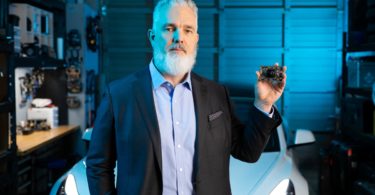
Introduction: Tesla, Inc. (NASDAQ: TSLA) has seen its stock price whipsaw in recent months, prompting some high-profile market watchers to declare it a buying opportunity once again. In early 2025, Tesla’s shares had nearly halved – dropping about 50% from a peak $1.5 trillion market cap down to roughly $845 billion ([1]). This steep decline came amid slowing sales growth and negative publicity, yet it also reset valuation from stratospheric levels. Seizing on the pullback, U.S. Commerce Secretary Howard Lutnick – a former Wall Street executive – made the unusual move of publicly endorsing Tesla stock on television, calling it undervalued and “unlikely to be this cheap again” ([2]). Around the same time, Cantor Fitzgerald analyst Andres Sheppard upgraded Tesla to “overweight” (a bullish rating), citing confidence in the company’s long-term growth prospects from self-driving tech, new models, and energy storage projects ([3]). These optimistic calls stand in contrast to other analysts voicing concerns about Tesla’s challenges and rich valuation ([4]) ([1]). This report digs into Tesla’s fundamentals – dividend policy, balance sheet leverage, cash flow coverage, valuation, and key risks – to evaluate whether the stock’s recent dip indeed offers an attractive entry point.
Dividend Policy and History
Tesla has never paid a cash dividend on its common stock, aligning with its strategy to reinvest all earnings into growth ([5]). Management has explicitly stated they do not anticipate paying dividends in the foreseeable future ([5]). Instead, Tesla has rewarded shareholders through share-price appreciation and stock splits – for example, a 5-for-1 split in 2020 and a 3-for-1 split in 2022, both executed as stock dividends (issuances of additional shares) ([5]). With a current dividend yield of 0%, income investors receive no direct payout ([5]). Traditional dividend coverage metrics like FFO or AFFO yield are not applicable to Tesla’s equity, since the company’s focus is on growth over income distribution. Any potential future dividend would depend on Tesla’s cash generation, investment needs, and board discretion at that time. For now, shareholders’ returns hinge entirely on price appreciation, which in turn rests on Tesla delivering growth.
Leverage and Debt Maturities
Despite its capital-intensive business, Tesla carries relatively low debt and has a very strong liquidity position. As of year-end 2024, Tesla and its subsidiaries had about $7.91 billion in total debt principal outstanding ([5]). This is modest for a company of Tesla’s scale – by comparison, Tesla’s stockholders’ equity was $72.9 billion ([5]) and its cash and short-term investments totaled $36.56 billion (with $16.14 billion in cash plus $20.42 billion in marketable securities) ([5]). In fact, Tesla’s net cash (cash minus debt) is strongly positive, underscoring a conservative balance sheet despite aggressive expansion. The company also maintains $5.0 billion of unused committed credit lines as additional liquidity buffer ([5]).
Safe Cash Plan
Learn the steps on page 71 to protect liquid savings.
Gold & Silver
Hidden chapter: The Perfect Gold Portfolio.
AI Crash Playbook
What to do the morning the market hollers.
Tesla’s debt is structured with minimal recourse obligations at the parent level. Nearly all of the $7.91 billion debt is non-recourse, tied to specific project financings or subsidiaries, with only about $7 million being recourse to Tesla Inc. directly ([5]). This means creditors’ claims are largely limited to particular assets (such as auto lease/loan receivables or the Chinese factory financings) rather than Tesla’s general assets.
The debt maturity profile is comfortably staggered. In 2025, only ~$2.35 billion comes due (mostly non-recourse project debt) ([5]), an amount well-covered by Tesla’s cash on hand. The largest maturity is in 2026, when about $4.12 billion (non-recourse) will mature ([5]) – still manageable given expected cash flows. Subsequent annual maturities drop sharply (e.g. ~$699 million in 2027 and $243 million in 2028) ([5]). Even the 2026 wall is not alarming, as Tesla could refinance or repay from internal resources if needed. In short, Tesla’s leverage is low and very manageable, with no indications of strain in meeting debt obligations.
Cash Flow and Interest Coverage
Tesla’s robust operating cash flow generation provides ample coverage for its financial obligations and reinvestment needs. In 2024, Tesla produced $14.9 billion of operating cash flow ([5]), reflecting healthy profitability and working-capital management. Even after heavy capital expenditures of $11.3 billion in 2024 (for new factories, equipment, and R&D) ([5]) ([5]), the company still generated positive free cash flow on the order of ~$3.6 billion. This indicates Tesla can largely self-fund its growth. Indeed, management plans to spend over $11 billion annually on capex for the next few years as it scales production and new projects ([5]) ([5]), and current cash flows appear sufficient to support this without resorting to excessive debt or equity issuance.
Interest expense is a minor footnote in Tesla’s financials, given the low debt load. In 2024 Tesla’s interest expense was $350 million ([5]), which is trivial relative to operating profits (2024 income before taxes was ~$9 billion ([5])). By adding back interest, EBITDA coverage of interest is roughly 25–30×, indicating extremely strong interest coverage. Even if interest rates rise or Tesla incurs some new debt, there is a huge earnings cushion to meet those costs. Moreover, Tesla earns significant interest income on its large cash and investments – offsetting some of the interest expense burden ([5]). In short, debt service is well-covered by earnings and cash flow, and Tesla’s liquidity position ($36 billion+ of cash/investments) could retire all debt outstanding several times over. There is no near-term solvency or coverage concern evident on the horizon.
Valuation and Comparables
Tesla’s valuation remains a contentious point. Despite the stock’s recent pullback, the company is still priced at growth-stock multiples far above traditional automakers. By one metric, Tesla trades over 12× projected sales ([4]), whereas legacy auto manufacturers often have price-to-sales ratios below 1×. Even after losing about $650 billion in market cap from its peak, Tesla’s market capitalization of $800+ billion dwarfs that of industry peers and implies a lofty price-earnings ratio. Analysts at MoneyWeek noted the stock was around 159× forward earnings by mid-2025, underscoring how much future success is already baked into the share price ([6]). Such a multiple is an order of magnitude higher than the single-digit P/Es of incumbents like General Motors or Ford. It’s clear that investors continue to assign Tesla a premium valuation more akin to a high-growth tech company than a carmaker.
Why are investors paying such a premium? Much of Tesla’s market value is predicated on future opportunities rather than current profits. Reuters reports that most of Tesla’s valuation rests on Elon Musk’s vision of Tesla as a leader in artificial intelligence, autonomous “robotaxi” services, and even humanoid robots – initiatives that could unlock new revenue streams ([1]). In fact, although EV sales account for nearly all of Tesla’s present revenues, those core operations are estimated to represent less than a quarter of the stock’s value; the bulk of value is attributed to businesses and technology still in development ([1]). Bulls argue that Tesla’s ongoing innovations in self-driving software, battery technology, and energy storage justify growth forecasts unparalleled in the auto industry. For instance, ultra-bullish investors like ARK Invest project Tesla’s stock could reach $2,600 by 2029, assuming widespread robotaxi deployment and other breakthroughs ([6]).
Skeptics, however, highlight the disconnect between Tesla’s stock price and its more modest real-world performance ([1]). With the company now delivering millions of vehicles annually, its growth rates have begun to slow from the torrid pace of earlier years. As discussed below, Tesla actually saw **year-over-year revenue declines in 2025 amid demand headwinds ([6]). If Tesla cannot re-accelerate growth or achieve the ambitious tech milestones that justify the hype, the valuation could appear unsustainably high. Indeed, a “minority of analysts” currently recommend buying Tesla’s stock at these levels ([4]), with many adopting a cautious or neutral stance due to the rich valuation and execution risks. In essence, Tesla’s valuation assumes heroic success in the next few years – a prospect that makes the stock’s risk/reward a frequent subject of debate.
Key Risks
Competitive and Market Risks: Tesla faces intensifying competition in the electric vehicle (EV) market, which could pressure its growth, pricing, and margins. In China – the world’s largest EV market – Tesla’s share of battery EV sales fell to about 10% amid fierce competition from local automakers like BYD ([7]). Competitors are engaging in price wars (BYD slashed prices on dozens of models) and rapidly improving their technology ([8]) ([9]). Tesla has responded by planning a lower-cost Model Y project (“E41”) in Shanghai, to cut production costs >20% and defend its position ([7]). Nonetheless, maintaining market share may require further vehicle price cuts, which would dent Tesla’s once-enviable automotive gross margins. Additionally, global economic factors – higher interest rates (raising auto financing costs) and changes in government EV incentives – can soften EV demand. For example, Elon Musk has warned that the expiration of U.S. EV tax credits could hurt sales, a risk that seemed to materialize in early 2025’s weaker delivery numbers ([6]). Growing inventories or slowed sales growth suggest Tesla is not immune to cyclical and competitive pressures.
Execution and Growth Risks:** Tesla’s valuation and long-term thesis rely on successful execution of ambitious projects, yet there is uncertainty in when or if these bets will pay off. The company has promised revolutionary products – from the Cybertruck to a mass-market ~$25k car and autonomous “robotaxi” fleet – but timelines have repeatedly been pushed out. Delays in launching the Cybertruck (which finally started limited production in 2023) mean Tesla still lacks a pickup truck offering in a key segment. Meanwhile, rivals have launched EV pickups and affordable models, seizing first-mover advantage in some areas. Tesla’s ability to achieve full self-driving (FSD) technology at scale is another critical uncertainty; despite years of development and bold promises, true Level 4/5 autonomy is not yet realized. If robotaxis and self-driving features take much longer to commercialize than bulls expect, Tesla’s growth might underwhelm relative to its hype. Similarly, Tesla’s growing energy storage and solar division holds great potential but must scale significantly to move the needle on overall revenues (energy generation/storage was ~$10 billion revenue in 2024, a fraction of automotive sales) ([5]). In sum, Tesla faces execution risk in delivering on its roadmap – any significant hiccups or technological shortfalls could disappoint investors who have priced the stock for perfection.
Elon Musk / Management Risks: Tesla’s fortunes are closely tied to Elon Musk, the company’s CEO and public face. Musk’s vision and drive have undoubtedly been key assets, but his outsized persona also introduces volatility and risk. The company openly acknowledges it is “highly dependent on the services of Elon Musk” and that losing him, or failing to attract similarly skilled leaders, could harm the business ([5]). Musk currently juggles multiple leadership roles (SpaceX, the social media platform X/Twitter, Neuralink, etc.), raising concerns that his attention is divided. Indeed, prominent analysts like Wedbush’s Dan Ives have cautioned that Musk must “balance his commitments to Tesla and other ventures” to steer Tesla through its current challenges ([3]). Moreover, Musk’s involvement in controversial political and social issues has become a double-edged sword for Tesla. His outspoken behavior – from high-profile political endorsements to polarizing commentary on X – risks alienating some consumers and investors. For instance, Musk’s alignment with far-right figures and appearances at partisan events have put off certain would-be car buyers ([4]) ([4]). This reputational risk is real: if Musk’s public image shifts Tesla from being seen as a cool tech brand to a political lightning rod, it could dampen demand and valuation ([4]). Musk’s own financial decisions also pose risk – he has pledged a portion of his Tesla shares as collateral for personal loans, and the company warns that if he were forced to sell those shares (e.g. to cover a debt obligation), Tesla’s stock price could drop sharply ([5]). All told, Tesla bears a key man risk rarely seen at this scale; Musk’s actions and attention will greatly influence Tesla’s trajectory, for better or worse.
Regulatory and Legal Risks: As a disruptive automaker and tech company, Tesla navigates a complex regulatory landscape. Auto safety regulators are scrutinizing Tesla’s Autopilot and FSD features, especially after a series of crashes allegedly involving the driver-assistance system. Tesla is facing multiple lawsuits and investigations related to whether it misled consumers about Autopilot’s capabilities and safety ([5]). While the company has so far avoided any crippling legal judgments, an adverse ruling or mandated recall/software restrictions could be costly and tarnish Tesla’s self-driving narrative. Additionally, environmental and trade policies pose risk. Changes in emissions standards or EV tax credits can sway the competitive balance. Geopolitical tensions, such as tariffs between the U.S. and China, can disrupt Tesla’s supply chain or pricing (Tesla’s export of Shanghai-made cars and reliance on Chinese battery materials make it sensitive to tariff changes ([6])). Finally, as Tesla grows further, it could attract antitrust or other regulatory scrutiny, especially if it leverages software and data in new ways (e.g. operating a robotaxi network might draw similar attention as big tech platforms have). In summary, regulatory developments in auto safety, trade policy, and tech oversight all represent material risk factors for Tesla.
Red Flags and Warning Signs
While Tesla remains fundamentally strong, a few red flags have emerged that investors are watching closely:
– Declining Margins & Demand Signals: Tesla’s once-high profit margins have been eroding due to price cuts and cost pressures. In 2024 and into 2025, Tesla implemented multiple vehicle price reductions across models and regions to stimulate demand. These discounts, along with higher costs, squeezed automotive gross margin. More worryingly, Tesla’s vehicle deliveries have stagnated or fallen in recent quarters, breaking its long streak of growth. By mid-2025 the company reported a 12% drop in quarterly revenue and a 23% drop in EPS year-on-year, with deliveries falling in both Q1 and Q2 of 2025 ([6]). Such contraction is a red flag for a growth company. Management attributed some weakness to external factors (e.g. incentive expirations), but it raises the question of whether Tesla is hitting a demand ceiling in certain markets or segments. If volume growth does not resume in the second half of 2025 (Tesla had targeted ~30% annual sales growth ([10])), the bull thesis could be undermined.
– Reliance on Regulatory Credits: A significant portion of Tesla’s profits in recent years has come from selling environmental regulatory credits to other automakers. In 2024, Tesla earned $2.76 billion from regulatory credit sales, up 54% from the prior year ([5]) ([5]). These credits carry nearly 100% profit margin and thus bolstered Tesla’s earnings substantially. However, credit revenue is inherently volatile and will decline as competitors produce more of their own zero-emission vehicles (reducing their need to buy credits). In fact, Tesla noted that its credit revenue jumped in 2024 partly because other manufacturers “scale[d] back” their EV plans, increasing demand for credits in the short term ([5]). This is not a sustainable income source long-term. The heavy reliance on credits to achieve profitability (credits accounted for roughly 39% of Tesla’s 2024 net income) is a quality-of-earnings red flag. If and when credit sales shrink, Tesla will need its core auto and energy businesses to pick up the slack in profit.
– Leadership Turnover and Governance: Tesla’s senior leadership has seen some turnover, and its corporate governance draws criticism at times. For instance, longtime CFO Zachary Kirkhorn unexpectedly stepped down in 2023, and Elon Musk assumed an unusual title of “Technoking” while remaining CEO ([5]). The board, historically seen as aligned closely with Musk, has faced questions about oversight (Musk’s massive 2018 performance stock award sparked a lawsuit alleging excessive executive compensation ([5]), though shareholders approved it and a court challenge was dismissed). The concentration of power in Musk’s hands – as CEO, largest shareholder, and even informal roles (his family members have been involved in management, and friends in key posts) – can be a governance red flag. There is little indication of an active succession plan should something happen to Musk. For a company of Tesla’s size, the absence of a clear succession and the potential for abrupt leadership changes add uncertainty.
– Controversies and Brand Perception: Tesla’s brand, arguably one of its most valuable assets, has been buffeted by controversies surrounding its CEO. Elon Musk’s polarizing statements and actions (such as high-profile political endorsements and online feuds) risk alienating portions of Tesla’s customer base. Recent surveys and anecdotes suggest some consumers are rethinking Tesla purchases due to disagreements with Musk’s politics or behavior. Incidents like Musk appearing to give a Nazi-like salute at a political rally became viral news ([4]) – this kind of headline is clearly negative PR for an auto brand. While Tesla’s product quality and innovation traditionally inspired customer enthusiasm, the growing cult of personality around Musk introduces brand risk. Red flags are waving when a company’s CEO-driven publicity strays outside the realm of product and technology and into divisive areas that could spur consumer boycotts or reputation damage. Tesla must be careful that its brand stays associated with clean energy and innovation, not controversy.
– Legal and Safety Issues: In addition to the Autopilot/FSD lawsuits mentioned earlier, Tesla has faced frequent vehicle recalls and safety probes – ranging from battery fire risks to touchscreen failures and Autopilot software updates. Most issues have been addressed via over-the-air software fixes, and Tesla often argues its active safety data proves its cars are safer than averages. Nonetheless, any high-profile accident linked to Tesla’s tech can become a red flag. For example, a fatal crash involving Autopilot draws intense scrutiny to Tesla’s claims and could invite stricter regulation or public backlash. Likewise, Tesla’s decision to beta-test FSD with consumers has been controversial. The accumulation of such issues poses a risk of eroding public trust if not carefully managed.
Open Questions and Outlook
Looking ahead, several open questions will determine whether Tesla’s stock is truly a “buy again” at current levels, or if further volatility lies ahead:
– Can Tesla reaccelerate growth to justify its valuation? After rare revenue and delivery declines in early 2025 ([6]), Tesla’s ability to resume a strong growth trajectory is crucial. Investors will be watching if new products (like the affordable model hinted for 2025 and the Cybertruck) can unlock fresh demand. Tesla has an unofficial goal to increase sales ~30% in 2025 ([10]) – hitting this target will require a significant rebound in the remaining quarters. If growth lags (or if EV market expansion overall slows), the current valuation multiples may prove difficult to sustain.
– How quickly will “future projects” deliver tangible results? A large portion of Tesla’s market value is tied to businesses that are nascent or yet to launch (robotaxis, autonomous driving services, Tesla’s Optimus humanoid robot, etc.). The company did herald a milestone by launching a robotaxi pilot service in Austin, TX in mid-2025 ([6]), suggesting progress in self-driving tech. But it remains unclear when – and how profitably – Tesla’s AI and robotics ventures will scale up. Will robotaxis meaningfully contribute to earnings by 2026 or 2027, or are they five to ten years away from mass deployment? The timing of these technologies coming to fruition will heavily influence long-term investor sentiment. Wide divergences in forecasts (e.g. Morningstar’s cautious outlook vs. ARK Invest’s wildly bullish $2,600/share by 2029 ([6])) reflect just how uncertain this aspect of Tesla’s future is.
– How will Tesla deploy its massive cash war chest? With over $16 billion in cash and $20 billion in investments on the balance sheet ([5]), Tesla has the luxury of strategic flexibility. An open question is whether Tesla will return some of this capital to shareholders (for example, via a stock buyback) or pursue acquisitions and new initiatives. Thus far, Musk has favored hoarding cash to guard against downturns and to fund organic growth. But as the company matures, some shareholders may push for capital return if high-ROI growth opportunities dwindle. Any hint of a future share buyback program or eventual dividend could alter the investor perception of Tesla (toward being a more conventional company). Conversely, Tesla might find innovative uses for the cash – perhaps investing in mining for battery materials, AI development, or even acquisitions of complementary tech companies. The choice of what to do with surplus capital will be an important strategic decision in coming years.
– Can Tesla maintain its innovative edge under growing competition? The EV landscape Tesla pioneered is now crowded with major automakers (GM, VW, BMW, etc.) and agile startups alike. Tesla’s current advantages include its software ecosystem, brand, charging network, and scale in manufacturing. Open questions remain on whether it can continue out-innovating rivals. For example, will Tesla’s lead in battery efficiency and range persist as competitors introduce new EV models? Will its vertical integration (from battery production to retail sales) keep yielding cost benefits? Moreover, as competitors catch up in software and launch their own autonomous driving features, can Tesla’s FSD stay ahead? The next few vehicle generations (Tesla’s forthcoming models and those of its rivals) will indicate if Tesla can hold its technological lead. Losing that edge could force Tesla to compete more on price – which is not ideal for a premium-valued company.
– How will external relationships and perception evolve? Tesla’s unique positioning has been bolstered recently by political connections – e.g. Elon Musk’s growing influence in Washington, D.C. and personal rapport with the current administration. The Lutnick episode ([2]), where a government official touted Tesla’s stock, underscores the unusual nexus of politics and Tesla. It raises the question of whether Tesla might receive policy support or incentives due to these connections – or conversely, whether backlash against perceived favoritism could occur. Similarly, Tesla’s public image among consumers could swing depending on Musk’s behavior and public sentiment. Will Musk tone down controversial engagements to focus on products, thereby repairing any brand damage? Or might further controversies amplify calls for consumers to consider alternate EV brands? The trajectory of public and political perception of Tesla is hard to predict, yet it will influence sales and investor confidence.
Finally, a perennial open question: Who eventually succeeds Elon Musk as Tesla’s leader, and when? Musk has given no indication of stepping aside and is still aggressively involved in Tesla’s day-to-day. However, no one is irreplaceable forever. The lack of a clear succession plan means any sudden change – voluntary or not – would be a shock. How Tesla manages a future leadership transition (ensuring continuity of vision and talent) is an important unknown that will hang in the background for long-term investors.
Conclusion: Tesla’s recent slump and the ensuing “buy again” calls from some experts highlight the company’s duality – it is at once a highly valuable enterprise with robust financials and a story-stock priced on bold visions of the future. On the one hand, Tesla boasts a fortress balance sheet, strong cash flows, and innovative prowess that position it well to capitalize on the electrification and automation megatrends. On the other hand, its valuation is demanding and its path is not without hurdles: competition is heating up, growth is encountering speed bumps, and the company’s iconoclastic CEO brings both visionary leadership and unpredictable distractions. Investors considering Tesla today must weigh these factors. The stock’s downturn in 2025 has made its price more palatable than last year’s frothy highs, and Tesla’s long-term opportunities – from energy storage to self-driving taxis – remain immense. However, achieving those opportunities will be the true test. As Wall Street’s divided opinions indicate ([6]) ([4]), whether Tesla is a clear “buy” at this juncture again depends on one’s confidence in Musk and team delivering on ambitious promises. In any case, Tesla’s journey will not lack for drama, and the coming quarters should provide clues as to which way the scales tip: toward renewed growth that vindicates the bulls, or further challenges that give pause to even the most devoted believers. The eyes of the market remain on Tesla, making it as crucial as ever to track the company’s fundamental metrics alongside the hype.
Sources
- https://reuters.com/business/autos-transportation/teslas-stock-defied-gravity-years-is-elon-musks-ev-party-over-2025-03-10/
- https://axios.com/2025/03/20/tesla-musk-lutnick
- https://ft.com/content/a729ff70-316b-4477-9338-c4e9f2bce526
- https://ft.com/content/f2ba8a34-f101-4e5d-9e64-28cddc79bec4
- https://sec.gov/Archives/edgar/data/1318605/000162828025003063/tsla-20241231.htm
- https://moneyweek.com/investments/should-you-invest-in-tesla
- https://reuters.com/business/autos-transportation/tesla-plans-model-y-costing-least-20-less-produce-defend-china-share-sources-say-2025-03-14/
- https://ft.com/content/03411eb1-ace8-44fa-b062-c6dced602ea5
- https://ft.com/content/74958651-ec86-4a07-a743-502445f54553
- https://reuters.com/business/autos-transportation/tesla-investors-pin-hopes-cheaper-ev-model-boost-sales-after-lackluster-2024-2025-01-27/
For informational purposes only; not investment advice.